
Skin conductance, often referred to as electrodermal activity (EDA), describes how your skin’s electrical properties change. Think of it as a way your body signals its internal state. This phenomenon isn’t something you consciously control; it’s managed automatically by your sympathetic nervous system. When you experience something that causes arousal, whether it’s exciting or stressful, your sweat glands become more active.
This increased sweat on your skin’s surface changes its ability to conduct electricity. So, a rise in skin conductance generally means your body is reacting to something, showing a state of physiological arousal. It’s a direct window into how your body responds to various stimuli, offering insights into your emotional and cognitive processes.
Historical Terminology for Electrodermal Activity
Over the years, scientists have used many different terms to describe this skin response. You might have heard it called galvanic skin response (GSR), electrodermal response (EDR), or even psychogalvanic reflex (PGR). There’s also skin conductance response (SCR) and sympathetic skin response (SSR), among others. This variety comes from different researchers and fields studying the skin’s electrical behavior. While these terms all point to the same basic idea – changes in skin electricity related to arousal – the standardized term used today is electrodermal activity (EDA) to bring clarity to the field.
The Role of Sweat Glands in Skin Conductance
The primary driver behind changes in skin conductance is the activity of your sweat glands. These tiny glands, located throughout your skin, release sweat in response to signals from your sympathetic nervous system. When this system is activated, it prompts the sweat glands to produce more moisture. This moisture, even in small amounts, makes the skin a better conductor of electricity.
The more active the sweat glands, the lower the electrical resistance of your skin and the higher its conductance. While the link between sweat and electrodermal response is well-established, some research has noted that EDA can still be detected even in individuals who may not have fully functional sweat glands, suggesting other contributing factors might also be at play.
Physiological Basis Of Skin Conductance
Your skin’s ability to conduct electricity isn’t something you consciously control. Instead, it’s managed automatically by your sympathetic nervous system. This system is a key part of your body’s response to various situations, often referred to as arousal. When this system becomes more active, it signals your body to prepare for action, like the well-known “fight or flight” response.
This increased sympathetic activity shows up in several ways, including changes in heart rate, blood pressure, and, importantly for this discussion, sweating. While this system is linked to emotional states, the electrical changes in your skin alone don’t tell you precisely which emotion you’re feeling. It’s more about the general level of physiological activation.
Autonomic Control of Sweat Glands
Your body has millions of sweat glands, and their activity is primarily regulated by the autonomic nervous system, not your conscious will. These glands secrete moisture onto the skin’s surface through tiny pores. This moisture, containing ions, changes the electrical properties of your skin. When the sympathetic nervous system signals for increased arousal, it triggers these sweat glands to become more active. This increased moisture secretion makes it easier for electrical current to flow across the skin, leading to a measurable change in skin conductance. This process is a natural bodily function, often occurring without you even noticing it, as it helps your body respond to demands, whether they are physical or emotional.
Variations in Sweat Gland Density Across the Body
The number of sweat glands isn’t uniform across your entire body. Certain areas, like your palms, fingers, and the soles of your feet, have a much higher concentration of these glands compared to other regions. This difference in density is significant because it means these areas are more sensitive to changes in sympathetic nervous system activity and emotional arousal.
When you experience a heightened state of arousal, the increased sweat production in these densely populated areas leads to more pronounced and easily detectable changes in skin conductance. This is why measurements are often taken from the fingers or palms, as they offer a more sensitive indicator of these physiological shifts.
Measuring Skin Conductance
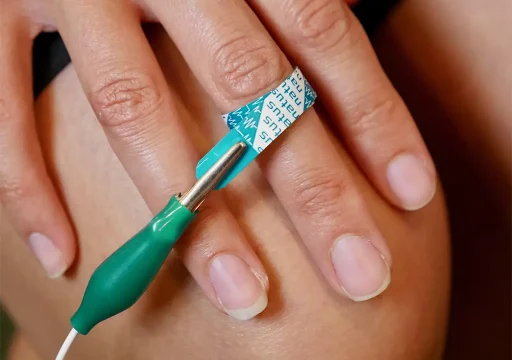
To understand what skin conductance is, you first need to know how it’s measured. Devices designed for measuring skin conductance, often called electrodermal activity (EDA) meters, are the primary tools. These instruments are built to detect subtle changes in the electrical properties of your skin. Essentially, they measure how well your skin conducts electricity. The electrical conductivity of skin can fluctuate based on various internal states. These meters typically employ a low, constant voltage applied through electrodes. The device then measures the resulting current or resistance between these electrodes. This process allows for the quantification of skin conductivity. Some devices might use a small amount of current to pass through the body, a method known as active measurement.
The readings from these meters provide data on the skin conductivity at a given moment. It’s important to note that the skin’s electrical conductivity can be influenced by many factors, leading to variations in the skin conductance level. The goal is to capture these changes accurately to understand the underlying physiological responses. These devices are quite compact, often consisting of electrodes, an amplifier to boost the signal, and a digitizer to convert the analog data into a digital format that can be recorded and analyzed.
Active vs. Passive Measurement Techniques
When you’re thinking about how to measure skin conductance, there are a couple of main approaches: active and passive measurement. Passive measurement is the most common method. In this technique, the electrodes are placed on the skin, and the device measures the naturally occurring electrical signals. It’s like listening to the skin’s own electrical conversation. This method is non-invasive and doesn’t introduce any external electrical current into the body, making it quite comfortable for participants. On the other hand, active measurement involves applying a small, controlled electrical current through the skin. The device then measures how this current flows. While it might sound more intrusive, the current used is typically very low and considered safe.
The choice between active and passive techniques can depend on the specific research question or application. Both methods aim to capture the electrical conductivity of skin, but they do so by observing different aspects of its electrical behavior. Understanding these different ways of measuring skin conductance helps in interpreting the data collected. For instance, a decreased skin conductance might be observed during relaxation, regardless of the measurement technique used, though the specific values might differ. The skin conduction bio technique is a prime example of a non-invasive, passive approach.
Units of Measurement for Skin Conductance
When you’re looking at the data from a skin conductance test, you’ll see it reported in specific units. The most common unit for measuring electrodermal activity is the siemens (S), or more frequently, its sub-unit, the microsiemens (µS). This unit reflects the conductance, which is the reciprocal of resistance. So, a higher reading in microsiemens indicates that the skin is more conductive, meaning electricity can flow through it more easily. This is directly related to the electrical conductivity of skin.
Sometimes, you might also see measurements reported in units of resistance, such as ohms (Ω) or kilo-ohms (kΩ). In these cases, a lower resistance value would correspond to higher skin conductance. It’s important to be aware of the units being used in any study or device you are working with, as this can affect how you interpret the skin conductance level. The fluctuations in these measurements, whether showing increased or decreased skin conductance, are what researchers and practitioners analyze to understand physiological and psychological states. The precise definition of skin conductivity is key to understanding these measurements.
Skin Conductance In Response To Stimuli
When you encounter something that triggers an emotional response, your body often reacts automatically. This reaction, known as arousal, can be quite subtle. For instance, seeing something frightening or experiencing intense joy can lead to changes in your sweat glands. These changes, in turn, affect how well your skin conducts electricity.
This is why skin conductance is a useful measure; it can reflect these internal states. Even if you don’t see any visible sweat, the electrical activity in your skin can change. The skin conductance response, in this context, is a direct indicator of your body’s reaction to emotional stimuli. Analyzing these skin conductance responses can offer insights into how you process and react to emotional events.
Cognitive Load and Attentional Processing
It’s not just emotions that influence skin conductance. Your mental state plays a role, too. When you’re concentrating hard on a task, or when your attention is being pulled in different directions, your skin conductance can change. This is related to cognitive load, which is essentially how much mental effort you’re expending. For example,
if you’re given a list of math problems to solve, even if they aren’t particularly difficult, your skin conductance might increase. This suggests that the act of processing information and focusing your attention has a measurable effect on your body’s electrical activity. Skin conductance response analysis can therefore also shed light on how your brain is working when it’s engaged in thinking and paying attention.
Influence of Stimulus Familiarity and Valence
The nature of a stimulus itself can also shape your skin conductance responses. Whether you’ve encountered something before or it’s entirely new can make a difference. Similarly, whether a stimulus is perceived as positive or negative, or even threatening versus rewarding, can influence the resulting skin conductance. For example, encountering something familiar might elicit a different skin conductance response than encountering something novel.
The valence, or the emotional value you assign to a stimulus, also plays a part. These nuances mean that skin conductance meaning isn’t always straightforward; it’s influenced by a complex interplay of your internal state and the characteristics of the external world.
Factors Influencing Skin Conductance Measurements
When you’re looking at skin conductance, it’s not just about what’s going on inside a person. The world around them plays a part too. Think about temperature, for instance. If the room is really cold, your body might react differently than if it’s warm. Humidity can also make a difference in how your skin conducts electricity. Even things like background noise or visual distractions can subtly shift the readings.
It’s like trying to hear a quiet conversation in a loud room; the environment can interfere with the signal you’re trying to pick up. So, when you’re taking measurements, it’s important to keep the surroundings as consistent as possible to get the clearest picture of what’s happening internally. This helps ensure that the changes you see are actually due to the person’s internal state, not just the weather or the room they’re in.
Internal Physiological Factors
Beyond the external environment, your own body has a lot of internal factors that can affect skin conductance. Things like your general health, how tired you are, or even what you’ve eaten or drunk recently can all have an impact. For example, if someone has been exercising, their sweat glands might be more active, leading to different baseline readings. Even simple things like how much water you’ve had to drink can influence your body’s hydration levels, which in turn can affect skin conductivity. It’s also worth noting that different people naturally have different levels of skin conductance.
Some individuals might have a higher baseline due to their unique physiology, while others might have lower readings. This is why it’s often recommended to establish a baseline for each individual before starting an experiment or assessment. Understanding these internal variations is key to accurately interpreting the data you collect, and it highlights the need for a personalized approach when analyzing electrodermal activity.
Applications Of Skin Conductance Measurement
Skin conductance, often referred to as electrodermal activity (EDA), offers a window into the body’s physiological arousal. This makes it a useful tool in various fields. You can see its application in psychophysiological research, where it helps scientists understand how people react to different stimuli. For instance, researchers might use it to gauge emotional responses or cognitive load during experiments. This helps in building a more complete picture of human behavior and mental processes. It’s a way to get objective data on subjective experiences.
Psychophysiological Research
In psychophysiological research, measuring skin conductance provides objective data on autonomic nervous system activity. This is particularly helpful when studying emotional responses, stress, and cognitive processes. Researchers can observe how EDA changes in response to various stimuli, such as images, sounds, or tasks. This allows for a deeper investigation into the physiological underpinnings of psychological states.
For example, studies might examine how EDA differs when individuals are presented with pleasant versus unpleasant images, or how it reflects the mental effort required for a complex task. The ability to quantify these physiological reactions makes it a valuable technique for understanding human experience in controlled settings. Wearable physiological sensors can decode cognitive load in healthcare settings, offering a way to monitor and understand cognitive states during healthcare tasks [085e].
Biofeedback and Stress Management
Skin conductance biofeedback is a notable application. In this approach, individuals are given real-time feedback on their skin conductance levels. This allows them to learn to recognize the physiological signs of stress or arousal. With practice, people can learn to influence these responses, often through relaxation techniques consciously. The goal is to help individuals gain better control over their physiological reactions to stressors, potentially leading to reduced feelings of stress and improved well-being. It’s a method that puts the individual in a more active role in managing their own physiological state. BioScan is an example of a biofeedback device that measures electrodermal activity and can provide a personalized snapshot, helping to identify stress responses and make informed decisions about well-being.
Usability Testing and Biometrics
Beyond research and therapy, skin conductance measurements find their way into usability testing and biometrics. In usability testing, EDA can indicate a user’s level of engagement or frustration with a product or interface. If a user’s skin conductance spikes unexpectedly while interacting with a website, it might signal confusion or difficulty. This information can guide designers in making improvements. In biometrics, while not as common as other methods, EDA can contribute to identifying individuals or assessing their emotional state, adding another layer of information to security or authentication systems. It’s a way to gauge reactions that might not be apparent through observation alone.
Frequently Asked Questions
What exactly is skin conductance, and why is it measured?
Skin conductance, also known as electrodermal activity (EDA), is a measure of how well your skin conducts electricity. It changes based on how aroused you are, both physically and emotionally. When you experience something exciting, stressful, or even just pay close attention, your sweat glands become more active, making your skin more conductive. Measuring this helps us understand your body’s natural reactions to different situations.
How does sweating relate to skin conductance?
Your body has millions of sweat glands, especially on your hands and feet. When your sympathetic nervous system is activated, perhaps due to stress or strong emotions, these glands release a small amount of moisture. This moisture on your skin’s surface makes it easier for electricity to flow, thus increasing skin conductance. Even a tiny amount of sweat you can’t see can change these measurements.

Can I control my skin’s electrical activity?
Skin conductance is not something you can consciously control. It’s managed automatically by your nervous system, which reacts to your environment and internal state. While some individuals can learn to influence it through specific relaxation or arousal techniques with practice, it’s generally considered an involuntary response that provides a window into your subconscious reactions.
What factors can affect skin conductance readings?
Several things can influence skin conductance measurements. External factors like room temperature and humidity can play a role. Internally, things like how much water you’ve had to drink, certain medications, or even the time of day can cause variations. Also, where on your body the measurement is taken can matter, as different areas have different numbers of sweat glands and might respond to different brain signals.
How is skin conductance measured in research?
Researchers use special devices called electrodermal activity (EDA) meters. These devices typically attach small sensors, like electrodes, to your skin, usually on your fingers or palm. A very small, harmless electrical current is passed between these sensors, and the meter records how easily the electricity flows through your skin.
What are some common uses for measuring skin conductance?
Measuring skin conductance is valuable in many fields. In research, it helps scientists study emotions, attention, and cognitive load. It’s also used in biofeedback to help people learn to manage stress and anxiety by recognizing and controlling their physiological responses. Additionally, it has applications in areas like usability testing to see how people react to products and in biometrics for identification.
Understanding Skin Conductance
You’ve now explored the basics of skin conductance, also known as electrodermal activity. You’ve seen how changes in sweat gland activity, driven by the sympathetic nervous system, affect the skin’s electrical properties. This response, while not consciously controlled, offers a window into your physiological and emotional states. Remember that factors like temperature and even certain medications can influence these readings, so context is key when interpreting the data. By understanding these principles, you can better appreciate the role of skin conductance in various research and clinical applications.